


La beauté du geste avec Rembrandt
Dans le tourbillon de nos agendas saturés, entre la saisie informatique et les protocoles standardisés, nous oublions parfois que notre premier instrument de diagnostic n’est ni le stéthoscope, ni l’IRM, mais notre regard.
Au XVIIe siècle, dans les ruelles d’Amsterdam, un homme a révolutionné la manière dont nous observons l’humain : Rembrandt van Rijn. En explorant la peinture flamande, nous redécouvrons les fondements de l’observation clinique moderne.
Le clair-obscur de la pathologie
Prenez un instant pour visualiser « La Leçon d’anatomie du docteur Tulp ».
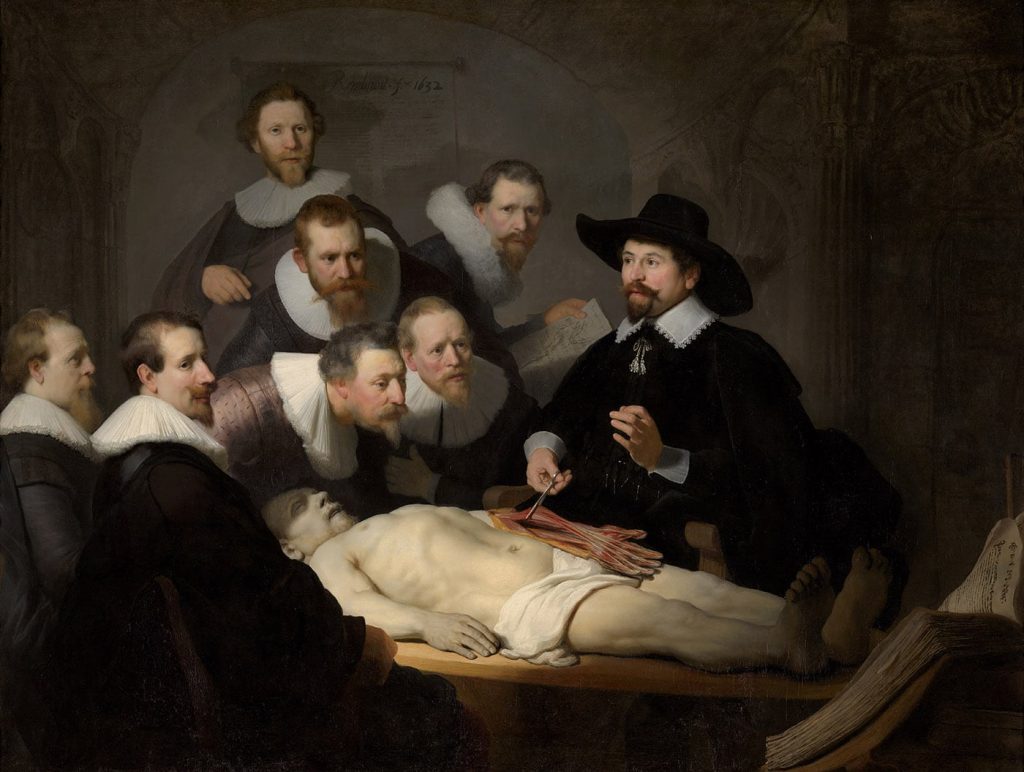
Au-delà de la prouesse artistique, Rembrandt y peint une rupture historique. Alors que la science de l’époque se contentait souvent de réciter des textes anciens, Rembrandt place le corps au centre, baigné dans une lumière crue.
C’est ici que commence le diagnostic : dans la capacité à distinguer le relief d’une inflammation sous une peau diaphane ou la fatigue nichée dans le pli d’une paupière. Le clair-obscur de Rembrandt n’est pas qu’une technique esthétique, c’est une métaphore de la pratique médicale : savoir porter la lumière sur l’essentiel tout en acceptant les zones d’ombre, les doutes et les nuances de chaque patient.
L’art de lire entre les lignes du corps
Les peintres flamands étaient des maîtres de la texture. Ils savaient peindre l’éclat de l’œil, la moiteur d’un front ou la pâleur d’une anémie bien avant que la biologie ne vienne y mettre des chiffres. En tant que soignants, nous sommes les héritiers de cette tradition.
Regarder un patient entrer dans le cabinet, observer sa démarche, l’asymétrie de son visage ou la manière dont il pose sa main sur son bureau, c’est déjà pratiquer l’art de Rembrandt. C’est ce que nous appelons aujourd’hui la « sémiologie visuelle ». Dans le regard du peintre, comme dans celui du clinicien, il n’y a pas de détail inutile. Une veine qui saille sur une tempe raconte une histoire de tension, une peau qui perd son grain dit quelque chose de l’épuisement organique.
Retrouver la « présence »
L’apport le plus précieux de Rembrandt à notre quotidien de soignant est sans doute l’humanité. Ses portraits ne sont jamais idéalisés ; ils montrent la vulnérabilité, la vieillesse, la douleur et parfois la résilience.
Appliquer la « méthode Rembrandt » au cabinet, c’est choisir de délaisser l’écran quelques secondes de plus pour regarder le patient dans les yeux. C’est retrouver cette présence qui transforme un simple acte technique en un soin véritable. La beauté du geste ne réside pas seulement dans la précision d’une suture ou la justesse d’une prescription, elle réside dans la qualité d’attention que nous portons à l’autre.
Et pour finir sur un ton plus joyeux parce que c’est le printemps et que Rembrandt avait aussi peint des choses du quotidien colorées, voici une jeune femme avec des fleurs :-).
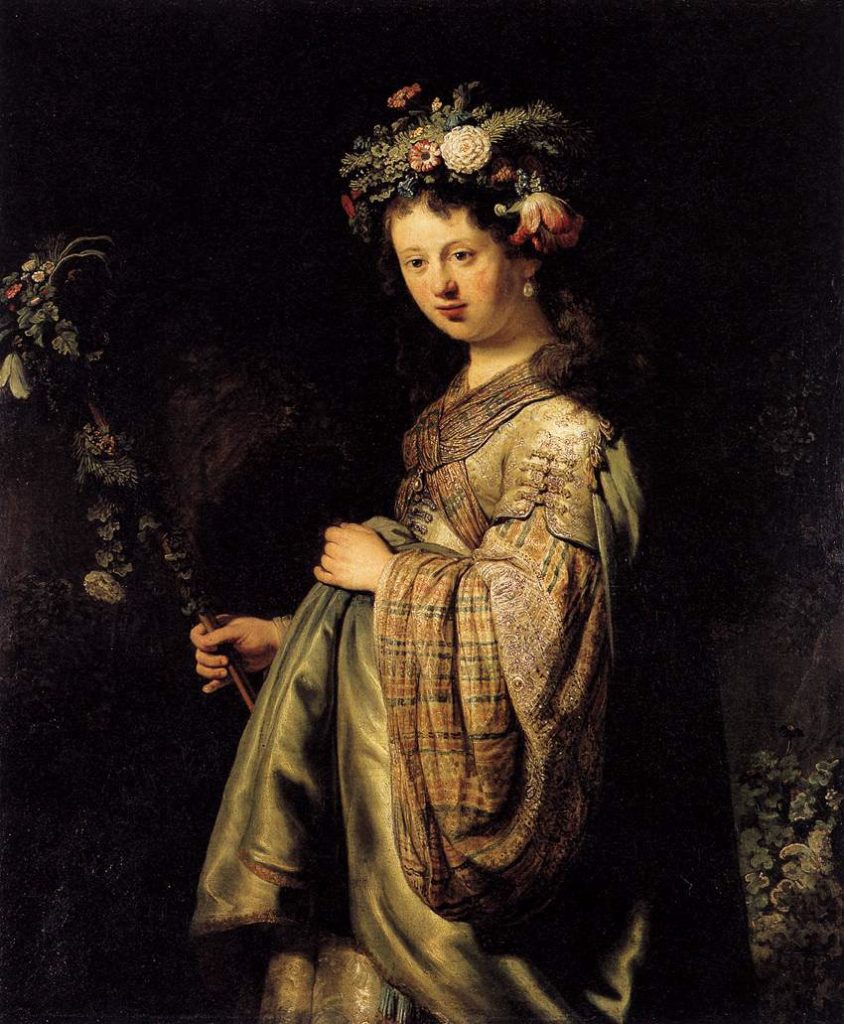
Flora 1634-1654, Rembrandt
Equipe Symbiomed